
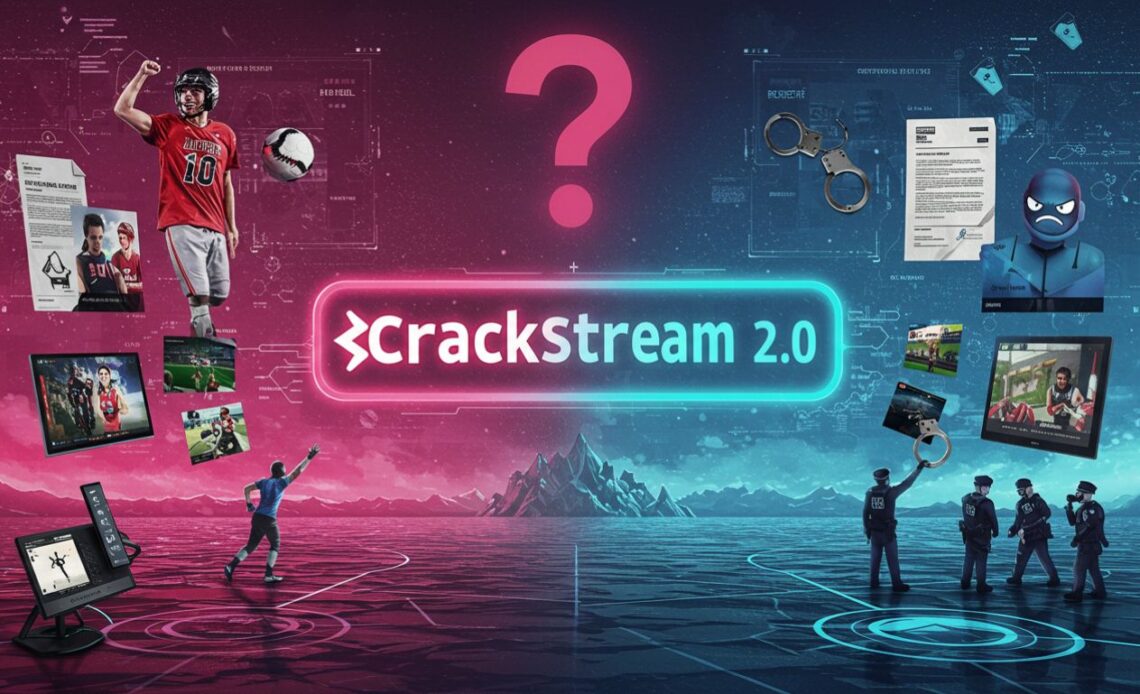
If you’ve searched for free live sports lately, you’ve probably run into CrackStreams 2.0—a buzzword splashed across blogs, forums, and pop-up sites promising “HD live sports with no sign-ups.” The reality is more complicated. What most articles call “CrackStreams 2.0” isn’t a single official upgrade or app. It’s a moving target: a patchwork of short-lived clone domains and look-alike portals that appear after enforcement actions take older sites offline.
This guide breaks down what CrackStreams 2.0 actually refers to, how these sites tend to operate, what changed after late-2024 anti-piracy takedowns, the real safety and legal risks you take when you try them, and practical, legal alternatives for watching the sports you love.
What People Mean by “CrackStreams 2.0”
A label, not a product
Across the web, CrackStreams 2.0 is used as a convenient label for new or re-skinned versions of the old CrackStreams idea: free links to live sports streams collected from around the internet. There isn’t a single official team behind it, and there’s no universally recognized “v2.0” software release. Instead, you’ll see:
- Clone domains that swap in and out of search results.
- Blog posts hyping “CrackStreams 2.0” as a major upgrade, often repeating claims like better bitrate, less buffering, no downloads, and multi-sport coverage.
- Landing pages that say they update links just before games, point to “Reddit sports streams,” or invite you to a “Discord” for backup mirrors.
Why the name keeps resurfacing
The CrackStreams brand became shorthand for “free sports streaming,” so each time a set of domains disappears, fresh pages try to capture that search traffic with a “2.0” tag. For users, it’s confusing. For site operators, it’s an SEO strategy.
How Typical “CrackStreams 2.0” Sites Operate
1) Link aggregation over hosting
Most clones don’t host the live feed themselves. They aggregate links from other places, embedding third-party players or redirecting you through chains of pages until a stream loads. This indirection is why pages often say “we do not host content” while still offering live game links.
2) Mirrors, backups, and domain hopping
You’ll often see multiple mirror links for the same match and messages like “links updated one day before the event.” When a mirror dies, another pops up on a different domain. Operators rely on domain hopping (shifting from .io to .to to .dev and beyond) to outrun blocks and takedowns.
3) Aggressive ad and notification prompts
Because there’s no subscription revenue, many clones lean on ad networks, forced redirects, and push-notification prompts. Some pages attempt to hijack your notifications or route you through “verification” walls—classic patterns tied to malvertising and scams.
4) Community breadcrumbs
You’ll see repeated references to “Reddit streams,” “Discord servers,” or “Telegram channels.” These help users find new mirrors quickly but also keep operators loosely connected to traffic without exposing a single point of failure.
What Changed After Late-2024 Takedowns
Coordinated enforcement
In December 2024, major anti-piracy efforts targeted high-traffic live-sports operations and seized or transferred control of dozens of domains, including CrackStreams-branded clones and popular siblings like StreamEast. Many seized domains now route to “watch legally” information pages, and sports communities noted widespread outages.
The whack-a-mole effect
Even after intense enforcement, new look-alike domains keep appearing, often with “2.0” in the headline. The cycle repeats: a flurry of traffic for a few events, lots of pop-ups, then silence as the domain disappears or is blocked—followed by another clone that inherits the same branding buzz.
The Real Risks Behind “Free” Streams
Legal risk varies by jurisdiction
Laws differ country-to-country, but unauthorized streaming of copyrighted sports typically infringes rights. Enforcement more often targets operators than individual viewers, yet end users aren’t risk-free. Some countries and ISPs monitor and block illegal sports streams during live events. Remember: using a VPN can protect privacy, but it does not change the legality of the stream itself.
Security and privacy risks are immediate
Independent research across multiple years has shown extremely high rates of malware, scams, and deceptive redirects on illegal streaming portals. Common issues include:
- Malicious ads that attempt to steal payment data or drop spyware.
- Fake “update your player” prompts that install adware or trojans.
- Notification hijacks that flood your device with scam pop-ups.
- Form grabs and phishing around “free account” gates.
On top of that, many clone sites lack basic HTTPS hygiene and have histories of hosting or linking out to high-risk content. In short: the “free” stream can quickly become expensive.
Reliability is poor by design
Unauthorized streams are fragile. During marquee moments—kickoff, walk-out, tip-off—streams stutter or vanish as sources get blocked or too many viewers pile on. That’s why clones push multiple mirrors and off-site chat servers. It’s also why so many posts about “CrackStreams 2.0” read like déjà vu: promising stability that rarely lasts.
What Articles Get Right—and What They Miss
Common claims you’ll see online
Many roundups describe CrackStreams 2.0 with phrases like “HD live sports,” “multi-sport coverage,” “no sign-up,” “works in any browser,” and “adaptive bitrate.” Some pages even pitch improved MMA/UFC, NBA, NFL, NHL, MLB, boxing, and F1 coverage. These claims reflect how clone pages market themselves, and you’ll find live categories and “links updated before events” on several active portals.
What’s often left out
- Who runs the site and where it’s actually hosted.
- How long the domain has been alive and whether it has a history of takedowns.
- Security analysis of the ad scripts and redirects in the player.
- Legal context for your country or ISP.
In other words, the sales pitch is front and center; the risk profile is an afterthought.
How to Evaluate “CrackStreams 2.0” Claims in 60 Seconds
When you land on a site calling itself CrackStreams 2.0, ask:
- Is the connection secure? If the page isn’t using proper HTTPS, leave.
- Do video controls look standard? Many embeds hide volume or quality controls behind “allow notifications” prompts—bad sign.
- Are there multiple forced clicks before the stream loads? Each forced click is an opportunity for a redirect or malware.
- Does the site ask for payment info for a “verification” or “trial”? Walk away.
- Is there a flood of push-notification requests or system pop-ups? That’s not normal for a legitimate player.
- Are there tell-tale community breadcrumbs (Discord/Telegram) but no clear ownership or policy pages? Treat it as high-risk.
Safer, Legal Alternatives for Live Sports
You absolutely can watch a lot of live sports without falling into the clone-site maze. The right option depends on your region and rights holders, but consider:
- Official league passes (e.g., league-run services that offer out-of-market games or replays).
- Broadcaster apps (networks with digital rights in your country often stream matches live or provide authenticated access with your TV provider).
- Sports streaming services (platforms dedicated to live sports that bundle multiple leagues).
- Free, legal streaming channels (some events and lower-tier competitions stream free via official partners, and many highlights are legitimately available).
- Pay-per-view from authorized providers for marquee combat sports.
Tip: When you compare prices, calculate season-long value rather than a single event—especially if your favorite team plays weekly. The per-game cost on legitimate platforms can be surprisingly reasonable over a season, and you avoid the security roulette.
A Reality Check on VPNs, Ad-Blockers, and “Safer” Workarounds
- VPNs protect privacy by masking your IP and encrypting traffic, but they don’t legalize unauthorized streams. They can reduce ISP throttling and blocklists, yet platforms and rights holders are increasingly aggressive at detecting and blocking VPN ranges during live events.
- Ad-blockers can remove some pop-ups, but they can also break embedded players—and they don’t stop malicious redirects baked into the page flow.
- “Safe clone lists” you see on forums are not safety guarantees. Clones change hands, scripts change nightly, and domains decay fast.
Why “CrackStreams 2.0” Will Keep Reappearing
As long as live sports are valuable and geo-locked, demand for free alternatives will fuel a new wave of clone landing pages. Domain registrars, cheap hosting, and opaque ad networks make spin-ups quick. Enforcement actions will keep knocking big operations offline; SEO-driven clones will keep trying to capture the searches those takedowns create. For users, this means a never-ending cycle of promises, pop-ups, and broken links.
Practical Checklist for Fans
- Decide what you watch most (league, team, competition window). Pick a legal service that covers the bulk of it.
- Plan around big events—many legitimate services offer monthly plans you can activate for key tournaments and cancel afterward.
- Use reputable devices and app stores only. Avoid sideloads of any “CrackStreams 2.0” APKs or unverified TV apps.
- Harden your setup: keep OS and browser updated, disable push notifications by default, use a password manager, and enable multi-factor authentication on key accounts.
- Be skeptical of “too good to be true” pitches. Free HD live sports with zero friction usually hides a cost you don’t see yet.
FAQs: CrackStreams 2.0
1) Is CrackStreams 2.0 an official site or app?
No. It’s a loose, marketing-style label applied to clone pages that come and go. There is no verified, official “2.0” release, team, or app.
2) Is it legal to watch sports on CrackStreams 2.0 clones?
In most regions, unauthorized streaming infringes rights. Enforcement typically focuses on operators, but users can face ISP blocks and potential legal exposure. Always check local laws and choose authorized providers.
3) Are these sites safe if I only click the player and not the ads?
Not reliably. Many clones route you through malicious or deceptive redirects, push intrusive notifications, or load risky scripts inside the player. The risk doesn’t vanish just because you ignore obvious ads.
4) Why do people say CrackStreams “died” and then came back as 2.0?
Large anti-piracy operations periodically take down high-traffic domains. New clones appear using familiar branding to capture the same audience. That gives the impression of a “return,” but it’s really domain churn.
5) Will a VPN make CrackStreams 2.0 safe or legal?
A VPN can improve privacy, but it doesn’t change legality. Clones can still deliver malware, scams, or data-harvesting scripts regardless of your IP location.
6) What are realistic legal alternatives if I only need a few key matches?
Look for monthly passes on official platforms, event-based PPV, or free broadcasts for select competitions in your region. If you’re flexible, many leagues offer on-demand replays at lower cost than live rights.
7) How can I spot a high-risk clone quickly?
Watch for non-HTTPS pages, forced notification prompts, multiple “continue to stream” clicks, vague “we don’t host content” disclaimers, and no clear ownership or policy pages. Any request for payment data on a “free” site is a red flag.