
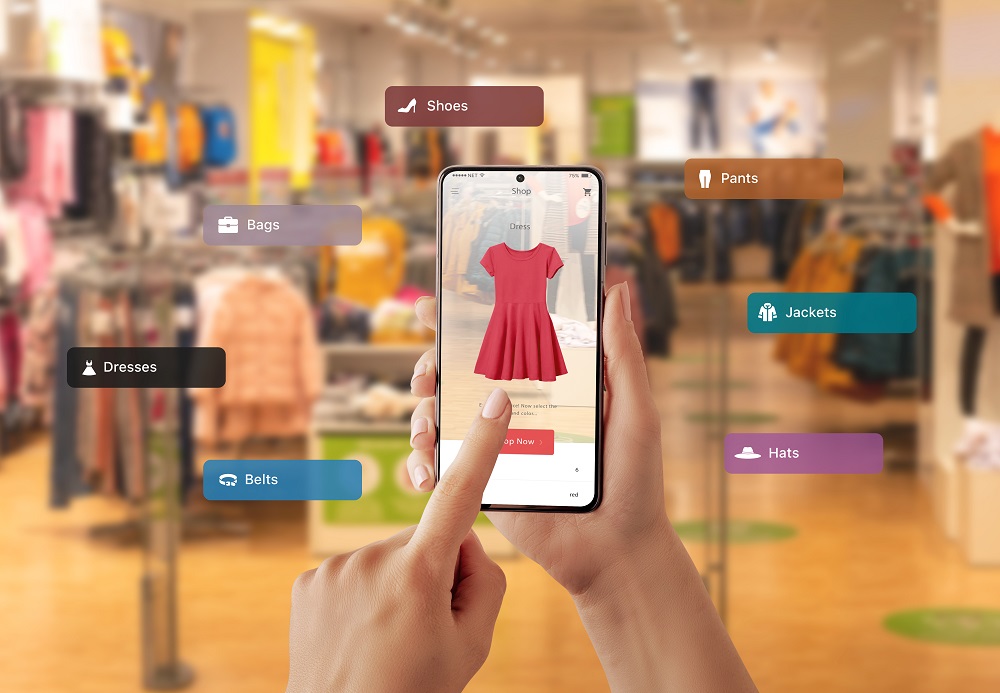
The global e-commerce sector has experienced meteoric growth over the past two decades, transforming from a novel digital convenience into the primary engine of modern retail. Consumers now possess the ability to browse millions of products from across the globe, compare international pricing models instantaneously, and have goods delivered directly to their doorsteps within hours. Yet, despite this massive digital infrastructure, online shopping has historically suffered from one fundamental structural limitation: the sensory gap.
Unlike physical retail, where a consumer can touch a fabric, try on a pair of shoes, or visualize how a piece of furniture fits into a specific room layout, traditional online portals restrict the buyer journey to two-dimensional flat photos and static text descriptions. This spatial abstraction creates substantial purchasing anxiety, leading to abandoned carts and high volumes of costly product returns.
Augmented Reality is systematically dismantling this barrier. By seamlessly superimposing interactive digital three-dimensional models onto a user’s real-world physical environment via smartphones or spatial computing displays, augmented reality bridges the gap between digital convenience and physical certainty. It is transforming online commerce from a passive browsing routine into an active, highly personalized, and experiential shopping reality.
Defining Augmented Reality in a Digital Retail Context
To evaluate the operational impact of this technology, it helps to distinguish augmented reality from adjacent spatial computing technologies like virtual reality.
Virtual reality completely occludes a user’s physical surroundings, replacing them with a entirely synthetic, computer-generated digital universe. This isolation requires dedicated headsets and is optimized primarily for deep, immersive training, simulated clinical therapies, or interactive gaming.
Augmented reality, conversely, does not remove the user from their physical world. Instead, it uses computer vision, advanced camera sensors, and real-time spatial mapping to overlay digital elements—such as a virtual armchair, a cosmetic shade, or a piece of jewelry—natively onto the user’s view of their physical room or their own body.
When embedded into an e-commerce platform, this software architecture allows consumers to interact with products dynamically, assessing true-to-scale dimensions, physical textures, and color alignments before initiating a transaction.
Core Operational Advantages of Immersive Commerce
Integrating immersive augmented reality toolkits into the online retail framework yields distinct, measurable rewards across multiple corporate performance indicators.
1. Radical Suppression of Product Return Rates
Product returns represent one of the most severe operational cash drains in modern e-commerce. In industries like fashion and home furnishing, return rates can routinely fluctuate between twenty and forty percent of total gross sales. The primary driver of this phenomenon is buyer mismatch—when a product arrives and the consumer realizes the color clashes with their wall paint, the size is incompatible, or the apparel fits poorly.
Augmented reality attacks this crisis directly by providing absolute spatial clarity prior to purchase. When a shopper can see an exact, true-to-scale digital replica of a product positioned natively in their space, the statistical probability of a mismatch drops dramatically. Data across global enterprise retailers indicates that implementing augmented reality try-on features reduces return rates by up to twenty-five percent, directly optimizing reverse logistics expenses and protecting net corporate margins.
2. Elimination of Purchasing Friction and Abandoned Carts
The e-commerce sales pipeline is notoriously prone to drop-offs right at the final checkout screen. Consumers routinely add premium items to their digital shopping carts, only to hesitate and close the browser application due to persistent purchasing uncertainty. They ask themselves: Will this rug fit between my couch and the television? Will this frame look too large on my face?
Augmented reality tools act as an immediate conversion catalyst. By offering an accessible “View in Your Space” or “Virtual Try-On” option directly on the product detail page, retailers answer these spatial questions instantly. Removing this lingering doubt neutralizes consumer hesitation, accelerates the velocity of the buying cycle, and significantly lowers cart abandonment metrics.
3. Substantial Increases in Customer Engagement and Session Durations
Standard flat e-commerce websites are highly transactional; users search for an item, view the price, and either purchase or exit, resulting in short session durations. Immersive interfaces transform this dynamic by introducing playful, interactive experimentation. Shoppers spend significant time cycling through different colors of a virtual watch on their wrist, testing ten different lipstick shades virtually via their front-facing camera, or rearranging an entire collection of virtual modular sofas across their living rooms. This active engagement elevates time-on-site metrics and strengthens brand intimacy, directly translating into higher average order values.
Primary Application Verticals Reshaping the Consumer Journey
The integration of spatial tools is driving rapid structural transformations across three dominant retail categories, each leveraging the technology to resolve sector-specific consumer friction.
Home Furnishing and Spatial Architecture
Purchasing furniture online has historically carried immense logistical risk due to the sheer size and cost of shipping large physical goods. Augmented reality platforms use highly advanced simultaneous localization and mapping algorithms to accurately map the physical floor planes, lighting conditions, and existing obstructions of a consumer’s room.
The software then renders the chosen furniture model with precise mathematical scale down to the millimeter. A consumer can physically walk around the virtual object using their phone screen, evaluating true sightlines, checking clearance gaps for doors, and observing how shadows fall naturally across the virtual fabric based on the real light sources in the room.
Fashion, Footwear, and Virtual Apparel Fit
The apparel and footwear sectors are mitigating sizing confusion through advanced body-tracking and facial-mesh technology. Modern smartphone front-facing camera arrays can map dozens of distinct coordinate points across a human face or foot in real time.
Virtual try-on engines utilize this data layer to overlay cryptographically secure, fluid digital models of glasses, hats, cosmetics, and athletic shoes perfectly onto the user’s moving body. The digital accessory tracks smoothly with the user’s micro-movements, allowing them to tilt their head or walk forward to view the fit from multiple angles, effectively digitizing the traditional physical fitting room.
Luxury Goods, Watchmaking, and Jewelry Verification
For high-ticket luxury segments, the barrier to purchase is deeply tied to the perception of craftsmanship, material quality, and personal scale. A consumer shopping for an expensive timepiece or engagement ring requires a high level of reassurance before deploying thousands of dollars digitally.
Augmented reality software solves this hurdle by utilizing advanced ray-tracing graphics engines that simulate the physical properties of precious metals, diamond refractivity, and leather textures in real time. When tokenized watches or rings are projected onto the customer’s body, the digital assets react dynamically to the ambient lighting of the user’s room, conveying an authentic sense of luxury and substance that traditional studio photography cannot replicate.
Technical Integration Checklist for Enterprise Deployment
Successfully scaling augmented reality tools across a massive commercial web matrix requires systematic alignment across data engineering, asset creation, and software development teams.
-
Standardize Hyper-Lightweight 3D Asset Pipelines: Convert heavy CAD engineering blueprints into optimized, lightweight digital files (such as USDZ or glTF formats) to guarantee instantaneous loading speeds across mobile network connections.
-
Prioritize Web-Native AR Over Dedicated Application Architecture: Deploy web-native frameworks that run seamlessly inside standard mobile web browsers, completely eliminating the customer friction of forcing users to download an external standalone application.
-
Embed Comprehensive Real-Time Analytics Trackers: Integrate behavioral monitoring logs into the spatial interface to track the exact product configurations, color switches, and session lengths chosen by the consumer during the interactive experience.
-
Ensure Robust Dynamic Environmental Lighting Models: Utilize automated light estimation software routines that read the ambient room brightness of the user’s phone, adjusting the shadows and reflections on the virtual product to match reality perfectly.
Frequently Asked Questions
What is the specific difference between app-based augmented reality and web-native augmented reality?
App-based augmented reality requires the consumer to download a dedicated software application from an app store to access spatial features, which can introduce high user drop-off friction. Web-native augmented reality, or WebAR, operates directly inside standard mobile web browsers using open web standards, allowing a user to instantly activate an immersive product camera view simply by clicking a link or scanning a QR code on a standard product page.
How do augmented reality systems ensure that a digital product is displayed to exact physical scale?
Modern spatial platforms utilize specialized depth sensors and computer vision algorithms embedded within smartphone cameras to calculate the precise distance from the camera lens to physical surfaces like floors and walls. Once the physical geometry of the room is mathematically defined, the software reads the real-world dimensions coded directly within the product’s 3D file, rendering the virtual object at a exact one-to-one physical scale in the environment.
Will the implementation of augmented reality tools slow down website page loading speeds?
If managed incorrectly, heavy 3D files can slow down page loading times, which severely harms SEO metrics and user retention. To prevent this, enterprise retailers utilize advanced file optimization techniques, such as mesh decimation and texture compression. This data engineering drastically contracts file sizes while preserving visual fidelity. Furthermore, the 3D data components are programmed to load asynchronously, ensuring the main text and image layers appear instantly while the interactive spatial asset materializes directly afterward.
Can augmented reality accurately predict how an apparel fabric will drape over a user’s unique body shape?
While current augmented reality excel at rigid accessories like footwear, jewelry, and eyewear, calculating the highly dynamic draping, stretching, and physical movement of soft textiles over an individual’s unique body geometry remains an engineering challenge. The industry is rapidly addressing this bottleneck by integrating predictive artificial intelligence body-scanning submodules that combine real-time camera tracking with statistical human shape datasets to simulate realistic fabric behavior during motion.
How does augmented reality integration directly assist companies in gathering consumer market data?
Immersive shopping sessions serve as a goldmine for behavioral data analytics. While traditional websites only track clicks and bounce rates, augmented reality interfaces record highly detailed interaction telemetry. Retailers can analyze the exact duration a user spent inspecting a product from different angles, which specific colors or materials were chosen for visualization most frequently, and what spatial configurations were tested, providing product development teams with direct empirical indicators of market preference.
What role does ambient lighting prediction play in making virtual retail products look realistic?
Without light estimation, a virtual product rendered on a screen will look flat, artificial, and poorly integrated, shattering the user’s spatial illusion. Ambient lighting prediction uses real-time computer vision to analyze the intensity, direction, and color temperature of the real light entering the smartphone camera lens. The software then applies matching digital highlights, reflections, and contact shadows to the virtual object, making it appear as if it is physically interacting with the room’s actual light fixtures.